Ideas

Renewal | All together, now | 14 June 2026

Date: 2026-06-14 14:47:47

Reproduced from Renewal. Published 14 June 2026. Social democracy depends on social solidarity: the ‘common endeavour’ cited on Labour membership cards is only possible when people feel they are on the same team. Yet our national debate is conducted as if low growth, strained public finances, and hollowed-out public services are the only nightmarish inheritances Labour must confront. In reality, the unravelling of the ties that bind should animate us with equal enthusiasm. Consider the challenges before us: addressing climate change, scaling investment to deliver both productivity and social justice, and meeting this generational moment for the security of Europe and the wider world. None of them can be overcome without a muscular state, but the state can only be as strong as the community spirit that underpins it. To thrive, we must rediscover a politics of relationships and reclaim the left’s heritage of solidarity. We live in an increasingly atomised society. It is making us sick and sad. Too many of us, too much of the time, retreat behind our own front doors – engaged in what the sociologist Sacha Hilhorst calls ‘the radical domestication of existence’.1 There is, however, an alternative: a society where everyone has equal access to the relationships that make life worth living, and a left that both creates and is fortified by a new politics of membership and belonging.

Clubbing together

Much of social solidarity’s most interesting work is being done by people we will never hear about, in places most of the commentariat will never go. There is plenty to be said about policies that would build solidarity, but I am particularly interested in how we can sustain the nation’s network of social clubs – places where we learn the habits of participation, reciprocity, and simply having a good time with people outside our immediate families. These remain magical institutions, but they are under mounting pressure. Half a century ago, around seven million people were members of working men’s and trade clubs affiliated to the Club and Institute Union (CIU).2Our parents and grandparents did not have to watch the American bar-based sitcom Cheers to learn about a place ‘where everybody knows your name,’ because they were already acquainted with club life. If you have never been inside a working class social club before, imagine one part pub, one part community centre, and one part extension of the family sitting room. And then imagine it just around the corner. Add to that British Legions and ex-Servicemen’s clubs and you will begin to see the network of associational life that sustained working class self-help across Britain’s industrial heartlands for a century and more. The benefits were not simply material – a place for a cheap night out and subsidised trips – they were also spiritual and political. But the same CIU that once issued around seven million membership cards now doles out just one million.3 That is not only because people are spending their spare time in different places; it is because we are spending that time in different ways. Increasingly, we are spending more time alone or with our nuclear families. The implications are worrying: UCL Policy Lab, Citizens UK, and More in Common polling has found that 44 per cent of people in the UK ‘feel like strangers to those around them’.4 Furthermore, research has found that 6 per cent of us are persistently lonely,5 while 17-23 per cent of us see friends, family or colleagues socially once a month or less.6 These trends began before the pandemic, but lockdowns exacerbated them. After the first flush of community WhatsApp groups and social solidarity, we got used to staying at home. As we spend less time socialising, we become more likely to fall ill and die early. In a 2010 paper, Holt-Lunstad et al. undertook a meta-analysis of 148 international research studies, and found that a person with poor social relationships is a staggering 50 per cent less likely to survive than a counterpart with a good social life.7 The former US Surgeon General warned that loneliness is as bad for us as smoking up to fifteen cigarettes a day.8 Findings from Nesta conclude that the way loneliness impacts on us can be as profound, in mental health terms, as a bereavement.9 Think about that for a moment. We have organised our lives in a way that is as bad for us as losing a loved one. The tragedy is that we know all this, because so many intellectual, spiritual and organising traditions have bequeathed to us the knowledge that we are meant to be sustained by communities. When Jimmy Reid, the great Scottish trade unionist, made his rectoral address at Glasgow University in 1972, it became known as the ‘rat race’ speech, because of his argument that we must reject the invitation to treat one another as competitors rather than compatriots. His most famous passage – reminding listeners that ‘we are not rats, we are human beings’ – led to his words being reproduced in The  New York Times, billed as the greatest speech since the Gettysburg Address.10 11 Personally, my favourite part of the speech is as follows:
Man is a social being. Real fulfilment for any person lies in service to his fellow men and women […] The big challenge to our civilisation involves morality, ethics, and our concept of human values. The challenge we face is that of rooting out anything and everything that distorts and devalues human relations.12

Our crisis of connection and solidarity

The twin crises of connection and solidarity have their roots in a contemporary arrangement of life that distorts and devalues human relations. The digital revolution may have provided many benefits, but we simply are not wired to live alone while algorithms feed us suggestions about what to eat next, watch next, read next, hear next, buy next. Think about the last really wonderful wedding you went to. You would not have gained as much listening to the band on a streaming service, nor savoured the food if delivered to you at home on a bike, nor laughed as hard listening to the speeches as a podcast. Those delivery mechanisms would all have been more convenient than schlepping out to a hotel or a town hall, but they would also have been a horrible facsimile of real life. Because the things that make life worth living happen when we spend time with others, attending to what happens in the spaces between us. Philosophers call these things ‘relationship goods’, the benefits we can only accrue from being with others who love, value, or respect us. Whatever your politics, the decline in relationship goods should worry you, but I believe there is a special onus on those of us who would characterise ourselves as on the left to worry about the distribution of relationship goods – just as surely as we worry about the distribution of wealth and power. That means tending to how class and connection intersect, recognising that while our disconnection crisis is a universal experience, its effects are not uniform. In a 2023 Carnegie UK report, 35 per cent of people said the cost-of-living crisis limited their ability to see friends and 34 per cent stated that the crisis had diminished their ability to participate in social activities.13 More in Common’s Shattered Britain report found that 43 per cent of people are going out less because they are strapped for cash.14 Most recently, a study by the Co-operative Party and anti-racist organisation HOPE not hate found that, of those who feel financially desperate, only around half felt that there were ways to get involved in their local community, with even fewer being proud of where they live.15 Simply put, people are being priced out of socialising, and in turn, priced out of the connections vital to their wellbeing.  We now face a connection crisis that requires a prescription equal to the diagnosis. Attending to this crisis involves a politics focused on developing an increased momentum around memberships, not simply getting people out of the house.

Somewhere to belong

It is time for a renewed focus on our associational life – how we locate ourselves in webs of overlapping memberships that provide for us both opportunities and obligations separate from the state and from our private relationships. This is not a new idea. From medieval guilds to today’s supporter-owned football teams, we have always been drawn to clubbing together. And while solving the cost-ofliving crisis would certainly make it easier for people to reconnect, it will not be enough on its own. What we need is an explicit plan for rebuilding memberships. Hence my focus on clubs and other member-owned institutions as a force equal to the populist moment we find ourselves in. Some London-based commentators I have spoken to have been dismissive, with one asking if ‘darts is really the way to beat Reform?’  My answer is an unequivocal yes. The clubs movement can trace its origins to the ‘rational recreation’ drive some 150 years ago, when social reformers and organised workers alike wanted local places for working class education and leisure. Despite its long heritage,  it retains a profound relevance to the politics of the 2020s. First, they create space for the formation and maintenance of relationships that the author Derek Thompson, writing on the so-called ‘anti-social century’ characterises as ‘familiar but not intimate’.16 By attracting regular visits from members, clubs become places, as Lyndon B. Johnson said of his own beloved Texas Hill Country, where ‘people know when you’re sick and care when you die’.17 The same could be said, of course, of a local boozer with plenty of regulars. Indeed, in Penicuik, a town in Midlothian, one pub has a Christmas tree where every regular who has died that year is remembered with a bauble. It is a beautiful tradition and I wish it would spread. But while those relationships are wonderful, they are not rooted, as a membership is, in reciprocity. As one member of Eastbourne Working Men’s Club put it, this is ‘a members’ club – it’s not all take, take, take, you have to give as well.’ 18 Local Trust research has shown what is obvious from everyday life: access to community spaces is a necessary precondition for developing relationships beyond our families.19 In turn, non-familial reciprocity is at the heart of any functioning society. There is another side to this: reciprocity assumes equality. When you walk into a club you belong to, even if you are seeking support, you do not do so as a ‘client’, a ‘beneficiary’, or a ‘service user’; you are there on equal terms with everyone else, in a spirit of self-help and mutualism. Nobody is going to patronise or judge you because the kind of community groups that use clubs – whether food pantries, men’s sheds, or playgroups – are groups that working people have built for themselves. Crucially, all this give and take occurs between people with different backgrounds, enabling the kind of low-pressure dialogue which can stop division taking hold. Clubs, of course, were not created to develop social cohesion – but they do deliver it. Public support for places where different communities and generations can ‘meet and mix’ remains high (indeed ‘places to meet’ is the number one thing people in low-income neighbourhoods think would improve their areas).20 Likewise, researcher Paul Bickley argues that ‘neighbourhood resilience relies on […] social capital (local voluntary action and leadership), physical capital (common space), and spiritual capital (a neighbourhood’s […] identity and meaning-making)’.21 Clubs deliver all three, and as a result provide a powerful antidote to polarisation. Clubs both shape and reflect my politics: they remind us that strong relationships do not need to be rooted in the ways we are the same – merely in the ways we afford one another reciprocal respect.

Everyday democracy

Clubs make plain their relevance to today’s politics in another important way: their governance structure. That they are generally co-operatives or member-owned charities means we do not simply belong to social clubs, they belong to us. That makes them both harder to sell off (as has happened to so many other venues) and turns them into places where we cultivate democratic habits of mind. If we want to make a change to our community space, we need to persuade others with whom we share it. That has enormous implications for our democracy. Research from Power to Change has found that someone involved in an ‘associational organisation’ (defined as membership-based and generally non-profit) is ‘16 percentage points more likely to trust British governments to place the needs of the nation over their own party.’22 This trust-generating effect is particularly potent for members of working men’s clubs, 27 per cent of whom place ‘a great deal’ of trust in government to put nation above party, equalled only by people involved in a local parent-teacher association.23 From the very beginning, the club movement gave working people experience in self-help and collective ownership. It should therefore be no surprise that club members today trust in institutions, given their own role in sustaining them. Membership-based institutions thus do something more powerful than just giving us the chance to meet. Many charities organise befriending services and fun days and activities so that people are not alone. But that is neither the same, nor as powerful, as supporting people to belong, something that is inherent to membership models. In promoting this work, I have encountered three main objections. The first is the idea that encounters are enough. There are indeed lots of interesting experiments about how you can encourage people to speak more – you can change the design of bus shelters so people face each other, or turn supermarket caffs into ‘chatty cafes’ where people put a sign on the table if they are up for a natter with a stranger. These are great ideas but even if those experiments were scaled nationwide, they would not get to the heart of this crisis. Although a fleeting conversation with someone might relieve the tedium of the day or reduce loneliness for a moment, it does not mean we have someone we would trust with a spare set of keys, or to watch the kids while we visit someone in hospital. It certainly does not mean we have learnt enough to disrupt and dispel any prejudices we might hold about a group that is different to us. For that we need repeat contact and a sustained relationship. The second objection concerns the role of technology. On the one hand, some people say the connection crisis is inevitable because it is downstream of changes in technology. Sociologist Robert Putnam famously argued that technology does indeed play a role: he traced much of the decline of American civic life back to the spread of the car and the invention of television.24 It is notable, however, that Putnam does not think technology makes our disconnection inevitable, merely more likely. On the other hand, tech optimists suggest online communities can make it easier for people to solve problems and meet likeminded folk – especially if a disability, caring responsibility, or rural location makes it difficult to attend in-person gatherings. I would agree that some online platforms and communities – like Mumsnet, or 38 Degrees – have a role in helping people combine their insights or their efforts with people who are on the same wavelength but not physically proximate. That is important. But do we honestly think entirely virtual experiences can or should be a substitute for real contact – where tears can be wiped, hugs exchanged, and hands held? The third objection is more fundamental – that connection is just not that important. We do indeed face huge challenges both at home and abroad. Before entering parliament, I spent nearly a decade at Save the Children, and so I do not dismiss the grotesque inequalities and injustices which disfigure our world. Almost 500 million children are living in a warzone,25 with thirty-one killed or maimed every day.26 Around 750 million people are living in hunger,27 with forty million children acutely malnourished in a world of plenty.28 And there were about forty-five million people displaced in 2024 by natural disasters,29 with a predicted 250,000 additional deaths per year in the 2030s caused by the climate crisis.30 In the face of all this, I can see why some people argue that fighting for a bingo hall or a youth club feels inadequate. I continue to believe, however, that connection is foundational. I do not think it is possible to detach the crises we are facing globally from the crises many of us are facing personally. Alex Evans runs an organisation called Larger Us, which works on where our states of mind and the state of the world meet. He puts it this way:
I used to think the answer was about what happens ‘out there’, in the world of policy, finance, emissions and so on. I spent the best part of two decades working on global risks – as a special adviser to two cabinet ministers, in the UN Secretary-General’s office and as a consultant for organisations like the US National Intelligence Council.
The more time went by, though, the more I realised that actually, the future is made ‘in here’ – in our mental and emotional states, our hopes and our fears, the stories we use to make sense of the world. Because it’s here that our behaviours – everything from what we buy and what we share on social media through to what we demand from our political leaders and how we vote – get decided.31
So do not let anyone tell you that this so-called ‘inner work’ is an indulgence in a world on fire: it is the very thing that allows you to remain clear-headed enough to douse the flames. Moreover, our forebears in the trade union and co-operative movements well understood that giving people a taste of everyday agency is a precondition for – not a diversion from – engaging them in a more transformational politics. As an experienced trade union organiser once told me, the best bit of advice he was ever given was ‘don’t go talking to people about a revolution if you can’t get a microwave in the staff canteen.’ If we want both more richly textured local democracies and a wider talent pipeline for our national politics, we should be looking for more people with experience of getting people real results in the places where they live and work. The clubs movement, community campaigns, the cadre of union shop stewards and the best of local government are all teeming with talent that knows how to do the tough, layered work of building trust and delivering results over prolonged periods. None of this will be easy: the platforms who profit from our attention have done a brilliant job of pulling us deeper and deeper into the world of apps and algorithms, streaming and scrolling. I am not immune from the lure of retreating to a screen-based life.  That path is easier, but it is also fatal for progressive politics and for our wider democratic culture. The academic Hahrie Han has a lovely phrase that sums this up:
If democracy is this challenge of people coming together to figure out the kind of shared lives they want to forge, then the behaviors that they use to negotiate difference are going to flow from the commitments they have to each other. So when my husband and I fight, we fight like we want to stay married.32
Living together well means fighting like we want to stay married. With populists on the march and division taking hold, it is time we all focused on joining things bigger than ourselves, and then living – and fighting – like we intend to stay in them.
Kirsty McNeill is the Labour and Co-operative MP for Midlothian and Minister for Scotland in the UK Government

Notes

1.      Sacha Hilhorst, Places to come together: Rebuilding local solidarities against the far right, Institute for Public Policy, 2025, pp8. 2.      Pete Brown, Clubland: How the Working Men’s Club Shaped Britain, Harper North, 2023. 3.      Ibid. 4.      UCL Policy Lab, CitizensUK and More in Common, ‘This Place Matters: reimagining community cohesion in Britain’, p7. 5.      Office for National Statistics, ‘Public opinions and social trends, Great Britain: personal wellbeing and loneliness’, 7 January to 1 February 2026 edition, 2026. 6.      Beatrice d’Hombres, Martina Barjakova and Sylke Schnepf, Loneliness and Social Isolation: An Unequally Shared Burder in Europe, Institute of Labor Economics, 2021, p7. 7.      Julianne Holt-Lunstad, Timothy Smith and Bradley Layton, ‘Social relationships and mortality risk: a met-analytical review’, PLoS Med, Vol. 7 No. 7, 2010, p14. 8.      Kathyrn Armstrong and Bernd Debusmann Jr, ‘US Surgeon General Vivek Murthy recounts bout of profound loneliness’: www.bbc.co.uk, 2 May 2023. 9.      Darren Hilliard, Patricia Beloe, Lucy Turner-Harris and Lauren Bowes Byatt, Investigating the impact of loneliness and social isolation on health, Nesta, 2024, p11. 10.    James Reid, ‘Bang the Bell, jack, I’m on the Bus’: www.nytimes.com, 20 June 1972. 11.    The Scotsman, ‘Scottish quote of the day: Jimmy Reid, Glasgow University, 1972’: www.scotsman.com, 17 May 2012. 12.    James Reid, Alienation, Rectorial Address delivered in the University of Glasgow, 28 April 1972. 13.    Amy Baker and Hannah Paylor, The long shadow of the cost of living emergency, Carnegie UK, 2023, p14. 14.    Luke Tryl, Anouschka Rajah, Ed Hodgson and Sophie Stowers, Shattered Britain: Making sense of what Britons want in a country that feels broken, More in Common, 2025, p43. 15.    HOPE not Hate and The Co-operative Party, ‘Holding on to HOPE: Lessons from Community Britain’: www.party.coop, 2025, p10. 16.    Derek Thomspon, ‘The Anti-Social Century’: www.theatlantic.com, 8 January 2025. 17.    Doris Kearns Goodwin, ‘The Divided Legacy of Lyndon B. Johnson’: www.theatlantic.com, 7 September 2018. 18.    Jonny Gordon-Farleigh and Oliver Holtaway, Social Clubs, Community Power, and Political Participation, Centre for Democratic Business, 2025. 19.    Alistair Ross and Grace Pollard, Community Buildings: strong foundations for renewal, Local Trust, 2026. 20.    Zoe Billingham, Stephen Frost, Ryan Swift and Jonathan Webb, Parallel lives: Regionally rebalancing wealth, power and opportunity, Institute for Public Policy, 2023, pp21-22. 21.    Paul Bickley, People, Place and Purpose: Churches and Neighbourhood Resilience in the North East, Theos, 2018, p10. 22.    Josh Westerling, Linda Hein and Nick Plumb, Closing the void: Can we reconnect politics with associational life, Power to Change, 2025, p17. 23.    Ibid., p29. 24.    Robert Putnam, Bowling Alone: The Collapse and Revival of American Community, Simon & Schuster, 2000. 25.    UNICEF, ‘Not the new normal’ – 2024 ‘one of the worst years in UNICEF’s history’ for children in conflict’: www.unicef.org, 28 December 2024. 26.    Save the Children, ‘World more dangerous than ever for children with crimes in conflict at highest level in 2023’: www.savethechildren.net, 31 October 2024. 27.    World Health Organisation, ‘Hunger numbers stubbornly high for three consecutive years as global crises deepen: UN report’: www.who.int, 24 July 2024. 28.    Save the Children, ‘Child hunger and malnutrition’: www.savethechildren.org.uk, October 2025. 29.    United Nations: Climate Action, ‘Causes and Effects of Climate Change’, www.un.org. 30.    World Health Organisation, ‘Climate Change’: www.who.int, 12 October 2023. 31.    Alex Evans, ‘Welcome to the Good Apocalypse Guide!’. https://goodapocalypse.substack. com/p/welcome-to-the-good-apocalypse-guide,  17 September 2024. 32.    Sam Pressler, ‘Building societal structures to hold the messiness of our relationships’: www.connectivetissue.substack.com, 3 October 2024.

Read More...

The Fabian Society | Promising development: the future of aid in an uncertain world | The will to win | 22 September 2025

Date: 2025-09-22 15:38:30

Reproduced from the Fabian Society. The weather was better than expected. The crowd was bigger. The atmosphere warmer. Twenty years ago, I helped to organise the 2005 Make Poverty History march in Edinburgh. A quarter of a million people turned up in solidarity with people they had not met, whose names they did not know and whose faces they would not see. Why had they come? Some had been part of the earlier Jubilee 2000 campaign for debt cancellation, often folk motivated by conscience and mobilised at church. Others were the same public sector professionals who had been the backbone of the anti-apartheid movement. Earlier in the year, Nelson Mandela had come out of retirement to speak in Trafalgar Square, telling the crowd: “sometimes it falls upon a generation to be great”. They had answered his call as so often before. And some of them, like me, were recent additions to the movement – in our 20s and excited to help shape this still-young century, bending history towards a fairer, safer world. A few days later, the G8 summit was held at Gleneagles. The representatives hammered out a landmark agreement which ensured millions more people got access to AIDS treatment and millions more children went to school. Back then, I was a young, idealistic Labour activist and a development campaigner. Now I’m a middle-aged Labour MP – and still a development campaigner. The intervening decades have only strengthened my conviction that campaigners make things possible, but politicians make things happen. Activism that shapes debates and mobilises public concern is an essential part of our democracy, but so too is the responsiveness of lawmakers: the people who can take that public call for action and turn it into life-saving and world-changing policies and budgets. Both sides needed each other then and both sides need each other now. We must acknowledge, however, just how profoundly the world has changed since 2005. Russia’s illegal invasion of Ukraine has brought war to our continent and a generational moment for our national security. Outrages in Gaza, Sudan and the Democratic Republic of the Congo are, due to the ubiquity of smartphones and social media, often the first things we see when we wake up and the last things we see before we go to sleep. And a global pandemic and escalating climate change remind us that some problems know no borders. One might assume, then, that there would be more public support for development than before: it has become clearer than ever that the line separating ‘over here’ from ‘over there’ is very thin indeed. The reality, however, is that advocating for international development – and in particular international aid – is very much a minority pursuit. What has gone wrong? First, austerity and the cost-of-living crisis have made life far too hard for too many people living in Britain. To be sure, I still receive many emails from people in Midlothian who believe our obligations do not stop at the borders of either county or country, and plenty of compassionate people will continue to dig deep for the Disasters Emergency Committee, Comic Relief or Christmas Jumper Day, even when they have troubles of their own. But people increasingly tend to talk to me about issues much closer to home – the waiting list their partner is on; their stress when calculating the cost of the weekly shop; the sense that while they work harder and harder, life is still surprisingly tough. It takes a lot of energy to worry about people you haven’t met when the ones you know and love are hard up and fed up. The government’s job, of course, is to put our shoulder to the wheel on both sets of issues. While it is 20 years since Gleneagles, it is only one year since this government was elected. We are working around the clock to get the basics right: investing in public services, helping with the cost of living and making the right long-term decisions to ensure growth in every corner of the country. That sits alongside our efforts to help Britain to stand tall in the world again. We have prioritised trade deals with India, the US and the EU. We convened international partners for a “coalition of the willing” to support Ukraine. And we are increasing defence spending as an investment in safety and stability. Giving people security in a world that feels out of control is the first step on the road back to an aid consensus that will allow us to get volumes back up. People in foundations, NGOs and CLPs who want to see aid increase again have work to do, too. It begins with truly, deeply wanting to win. Too many development activists seem to believe their task is scolding the public for not having a sophisticated enough under standing of seminar room jargon. And all too often, fundraising appeals can make it seem like the need is endless and nothing ever gets better, even though people have given generously year after year. Frequently, the story that reaches the public is: you are collectively guilty of the crimes of the past and your previous ‘saviourist’ efforts have made little difference. Is it any wonder the aid cuts were popular? So what might a different narrative on aid look like? Let’s start with what everyone believes to be true: the world is dangerous and there is strength in numbers; if we can relieve extreme suffering, we should; some of the drivers of suffering are issues no one country can fix on their own. That is the intuitive, everyday language of a new movement of solidarity and partnership, rooted in a belief that we must pull together when risks are many and easy solutions few. Telling that story will require two main changes to how the case for aid is made. First, we have to stop seeking the magic phrase or tactic that makes all the rest redundant. I have sat in too many pitches for funding as someone claims one thing (a viral film, a concert, a ‘frame’) will deliver the return on investment we all want. After a quarter of a century trying to build development support, I am afraid I have concluded that there is only one solution: you have to do all of the things, all of the time. Yes, we need local organising. Yes, we need data-driven research. Yes, we need world-class advocacy. Yes, we need arresting journalism from people we trust – whether in ‘new’ or ‘old’ media – and yes, we need people who can infuse popular culture with stories of hope and humanity. We need it all – and we need it sustained, at scale. There are no shortcuts. Second, we need to stop policing the boundaries of what counts as ‘pure’ development as rigidly as we did at the turn of the millennium. Back then, we were worried that DFID, then still a newborn, would be too weak to prevent aid from being instrumentalised for purposes other than poverty reduction. Those who had lived through the Pergau Dam scandal – where UK aid was traded for an arms deal – were rightly keen to establish a clear demarcation of different tools (development aid, diplomacy and defence) serving different purposes. The conditions we face now, however, are different, and new challenges are keeping policymakers awake. The threat of climate breakdown, a failure of the global food system, or another pandemic require policymakers to use every tool simultaneously, including development assistance. We cannot advance an argument for aid that says it helps with the challenges that are top of the political agenda but then demand it is kept wholly separate from discussions about their resolution. Aid is not the whole answer to how we make the world safe – just as it was never the whole answer to how we could make poverty history – but it is part of a wider strategy, and we should be confident in the progressive case for promoting it as such. Twenty years on from that sunny Edinburgh day, politicians continue to make things happen. The question for those mobilising to influence us is this: how comfortable are you with changing your approach in order to make change possible?
Read More...

Kirsty McNeill delivers speech to the Stronger Local Places: Rebuilding the Social Clubs Movement conference | 11 September 2025

Date: 2025-09-11 14:39:45

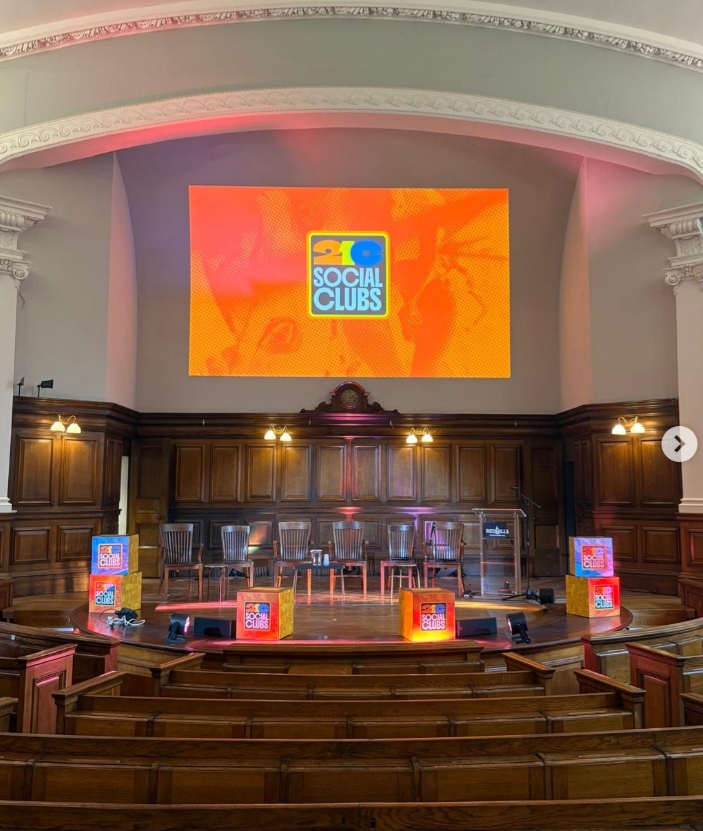
Kirsty McNeill MP delivered the keynote address at Stronger Local Places: Rebuilding the Social Clubs Movement conference, organised by the Centre for Democratic Business. The conference took place on the 11th September 2025 at the Mildmay Club. Kirsty’s speech as delivered is below. You’ve all got lives, most of you have jobs, lots of you have clubs to run.  So why are you here?  I suspect for many of you it’s because you’ve got the clubs bug and you’re already somewhat committed to infecting others with it.  I’m going to come to how we might do that in a bit.  But I thought at the outset I should start with those of you who aren’t all in yet.  The people who’ve come along today because you work for a funder, or an infrastructure body, or an organisation that cares about community development or neighbourhood renewal.  You might have come because you’re a bit intrigued about clubs but not yet convinced they are more than a “nice to have”.   I’ll call you lot the “clubs curious”.  And I want to give you just three reasons why clubs are absolutely magical places.  The first and to my mind most important feature of a social club is it creates a sense of belonging.  Because here’s the thing about a club. It’s not just that we belong to it  It’s that it belongs to us.  Now, I might feel a sense of ownership over lots of things in my community. The library. The swimming pool. My local.   But that’s all it is. A feeling. Whereas I actually do own the club, in common with all the other members. Most clubs are membership charities or co-operatives and that means it’s ours. And it can’t be sold up or boarded up without our say so.  Now don’t get me wrong, I think we need to retain and renew all sorts of other assets too, from restaurants to museums, from pubs to parks, from soft plays to local theatres.   Thriving neighbourhoods need them all – but I would argue that clubs bring something uniquely valuable because in ownership there is power – and that power is what elevates a club from somewhere we go, to somewhere we belong.   But that by itself isn’t enough to explain what makes clubs special.  Because I also belong to the co-op retail family in a meaningful way. But I’ll be honest I’m nuts about clubs but merely quite keen on my local co-op shop.  I am so excited that we’re going to hear shortly from Pete Brown, the author of Clubland: How the Working Men’s Club shaped Britain. I can’t tell you how often I’ve shoved his book into people’s hands.   And it’s because clubs do more than just provide belonging, like all the other co-ops in our lives. It’s because they also provide connection.  Ross is a member of one of our local clubs in Midlothian. And he described it like this: “When I joined the club, this village went from being the place where I stay, to the place where I live”.  And why is that? It’s not, in my view, just because the club provides affordable entertainment and leisure facilities – a chance to enjoy the things that make life worth living. It’s also because the club creates the most important thing of all – the kind of repeat contact with people outside your immediate family that means there’s enough trust to give someone a spare set of your keys.   As Jonny mentioned in his introduction, this summer I was very pleased to host a delegation of social club members in Parliament to meet the local growth minister.   One of the things they impressed on us at that meeting was how long club bar stewards tend to stay in post. In some places the person behind the bar at the club holds more collective memory than the council leader could ever dream of.   Those people are essential community connectors, weaving folk together and turning the club from just a licensed venue to more like an extension of the family sitting room.  And we know a lot about how clubs are really working from the 50 clubs who engaged with the national survey Jonny described and the further 40 clubs who joined roundtables before today.   The story they share is consistent – that they are places where people come together like nowhere else, across generations, income levels and ways of looking at the world.   And that matters hugely, because we were born to be in community with one another.   We simply are not wired to live like this: stuck alone behind our front doors while algorithms feed us suggestions about what to eat next, watch next, read next, hear next, buy next.  The digital personalisation revolution has made life simultaneously easier and less joyful, with enormous implications for both our own wellbeing and our common life.   The tragedy is that we know this: many of us realise that our choices are making us sick and sad. We are spending less time socialising, with predictable consequences. UCL Policy Lab and More in Common polling has found that 44 percent of people in the UK “feel like strangers to those around them” and 8 percent of us are persistently lonely.   The impact is stark: there is mounting evidence that being disconnected from others makes us more likely to fall ill and die early.  In a recent paper, Demos cited a literature review of 148 international research studies, concluding that strong ties have a huge bearing on our longevity. That builds on the finding from the former US Surgeon General that loneliness is as bad for us as smoking up to 15 cigarettes a day.  So if you care about how we live well and how we live together, then you have to care about clubs.  And that brings me to my third reason that I hope will bring you club curious people over to the club stan camp.  And that is this, clubs don’t simply develop belonging and connection, they also help us to cultivate democratic habits of mind. That is partly because if we want to make a change to our community space, we need to persuade the others with whom we share it.   But it is also because as places to meet become harder to find, so too does the common ground between us.  HOPE Not Hate research has found that the presence of this kind of venue is a key indicator of community health and – therefore – an important inoculation against populist politics. People who don’t encounter each other are less likely to trust each other, and where trust is absent, division can grow.  And the best antidote to mistrust is working together as members not just neighbours, building trust in each other and our shared institutions as we go.   Research from Power to Change has found that someone involved in an “associational organisation” (defined as membership-based and generally non-profit) is “16 percentage points more likely to trust British governments to place the needs of the nation over their own party”.   Interestingly, this trust-generating effect is particularly potent for members of working men’s clubs, 27 percent of whom place “a great deal” of trust in the government, equalled only by people involved in a local parent-teacher association.   From the very beginning, the club movement gave working people experience in self-help and collective ownership: so, it is no surprise that club members today trust in institutions, given their own role in sustaining them.  As our forebears in the movement well understood, giving people a taste of everyday democracy is a pre-condition for, not a diversion from, more transformational politics. As an experienced trade union organiser told me, the best bit of advice he was ever given was “don’t go talking to people about a revolution if you can’t get a microwave in the staff canteen.”   Starting with what matters to people where they live and work is the practice that built co-operative and trade union movements and delivered the biggest progressive victories of the last two centuries.   We should remember those lessons today.  So, I said at the start I was going to try to win over the clubs curious.   But I also want to equip the already convinced with some ways to litigate the argument for clubs so that you keep building our movement.   When I’ve been out making the case, I’ve encountered three objections from people who might otherwise be drawn to this kind of collective effort.  The first is that the stereotype of a working man’s club is of somewhere quite exclusionary, where people listen to ‘my mother in law’ jokes or worse. It couldn’t be further from the truth.   The movement today is vibrant, diverse and dynamic – and not only are members and performers from very different demographics welcome in the clubs movement, for some it is their happy place – where they feel safest and most cherished.  The second is that the offering from clubs is simply outdated in a world of apps and algorithms, streaming and scrolling.  I don’t think we can give up that easily. Yes, the movement needs to secure our relevance and some of the sessions today will help with just that.   But I also think there remains a huge market for in-person events and socialising.  It was not so long ago that the world was coming out of lockdowns and most of us were experiencing a deep physical yearning to be with others.  When your body tries to tell you something, listen.  And the final objection is in many ways the most dangerous and it is this.  There will be those who argue, as we face a generational moment for our national security and the task of repairing a public square ravaged by austerity, that a focus on shared spaces in which to form and strengthen our relationships is a second-order concern.   My own view is that they have misdiagnosed this moment: it is precisely because we are facing a storm that the answer to our most urgent challenges is to club together. 
Read More...

Co-operative Party | Clubs are the answer to our connection crisis | 19 March 2025

Date: 2025-03-19 14:58:30

Reproduced from the Co-operative Party. Published 19 March 2025. Lots of my childhood memories involve tombola. We’re a family of joiners: when there’s something needing done, we link up with others and get stuck in. So I was forever being plonked behind a table and told to sell tombola tickets in support of one cause or another. If you’re the kind of person who reads a Co-operative Party pamphlet you might well have similar memories, of evenings spent in community centres, church halls or working men’s clubs. And I hope you’ll share my alarm that our children are much less likely to be able to say the same. To give some sense of the rate at which we are losing these key bits of social infrastructure, it is worth looking to the Club and Institute Union (CIU), the central co-op which supports the clubs movement. Half a century ago the CIU issued around seven million membership cards every year. Now it’s about one million. That is an enormous rate of decline for these magical places that are one part community centre, one part pub and one part extension of the family sitting room. Their loss is terrible news for everyone as the kinds of social bonds made in clubs are crucial for our wellbeing. In a recent paper, Demos cited a literature review of 148 international research studies, concluding that strong ties have a huge bearing on our longevity. That builds on the finding from the former US Surgeon General that loneliness is as bad for us as smoking up to 15 cigarettes a day. In turn, Local Trust research has shown what is obvious from everyday life: access to community spaces is a necessary precondition for developing relationships beyond our families. It just isn’t good for us to spend more and more of our time behind our own front door with our algorithmically-generated Netflix, Spotify and Amazon recommendations and clubs are exactly the sort of places that help us to open up and turn strangers into friends. We need those wider neighbourhood ties so that there’s somewhere to turn when someone needs to sit with one sleeping child because another needs raced to A&E, or our houses or businesses got battered in a storm. Online connections can be sustaining, but they are no replacement for someone who has a spare set of keys. That matters for all of us as individuals but it has a wider impact on our ability to live together well too. As places to meet become harder to find, so too does the common ground between us. HOPE Not Hate research has found that the presence of this kind of venue is a key indicator of community health and – therefore – an important inoculation against populist politics. People who don’t encounter each other are less likely to trust each other, and where trust is absent, division can grow. And as collective spaces shut, we all lose out on opportunities for shared wonder too: the Music Venue Trust’s latest figures show we’ve lost 125 grassroots music venues in just a year. So this stuff matters to all of us, whether we are interested in public health, community cohesion or simply the joy that comes from having an unforgettable night at a gig. That makes it possible to build a broad and enduring coalition behind an effort to save our social infrastructure. It is incumbent on us, however, to make sure that any such movement is not stripped of its politics. If we simply ensured that local authorities provided community centres and there were enough pubs and privately-owned events spaces available for hire we would not, in my view, have succeeded. Clubs matter because they aren’t simply places we can go: clubs are places we can belong. Being rooted in a membership model they provide a microcosm of what a more co-operative economy and society could be. Think of each of our co-operative values: self-help, self-responsibility, democracy, equality, equity and solidarity. All of them find expression in the life of a club, making the club movement one of the greatest engines of progress in our history. It’s not an accident that, at its height, the clubs movement sent even more working people to parliament than the trade unions. Working class clubs have a proud history, but we need not think of them as simply part of our heritage. Plenty of clubs have reimagined themselves for the 21st century, and those that are yet to do so could with a little bit of help. So if we want to have a thriving clubs sector long into the future, there is much we can do to support clubs to survive and then to thrive. Firstly, join. Our co-operative politics informed Labour’s manifesto commitment to community ownership and we look forward to a new era of communities taking the buildings and facilities that matter to them into their shared protection. Clubs, however, are already there and joining one is one of the best things you can do to help show community ownership works in practice. Secondly, champion the policies which could have an outsized impact on clubs. Whether it’s cracking down on ticket touts, reforming planning or providing funding for local growth, our Labour government already has plenty of change on the way that could benefit our clubs. Thirdly, help locate our support for clubs in our wider politics of place. Our Labour government had a terrible economic inheritance from the Tories and it was the right thing to do to focus on emergency action to clear that up. The first phase of this government was about fixing the foundations. The next, as we implement our Plan for Change, is about advancing the decade of national renewal we promised. Our distinctive co-operative contribution to that effort can be in translating these national ambitions into local plans. Just as our allies in the trade union movement will be reminding ministers that the New Deal for Working People must come alive in individual workplaces and shift the balance of power between workforces and their actual employers, so we in the co-operative movement must anchor conversations about national policy in the neighbourhoods and local places where people mark the most important moments of their lives. Quarter of a way through this century we have enormous challenges in our economy and wider society. The answer, as always, is to club together.
Read More...

Labour Hame | Lifting Scotland | 7 February 2025

Date: 2025-02-07 00:00:35

Written by Kirsty McNeill MP, reproduced from Labour Hame here. Many of us will have recently celebrated the life and work of Robert Burns. His works give us insight into the human condition, but he was also never shy of expressing a view on the politics of the day. And today I think he’d lament that this country he loved has developed a form of politics that is essentially declarative, more interested in the press release than the plan, the announcement than the achievement. The Scottish Government has been reduced to declaring any number of causes a priority, without actually doing anything that might demonstrate that meaningful prioritisation has taken place. For example the First Minister, or, as I believe we are now supposed to call him, ‘Full On John’ (O wad some Power the giftie gie us, To see oursels as ithers see us) has taken ‘personal control’ of the NHS in Scotland. And where has that got us? Nearly one in six Scots on a waiting list. Nearly half a million of us have waited over 8 hours in Scottish A&E departments. And, most shockingly of all, health inequalities are widening and life expectancy is declining. What about the climate emergency? Burns was so far ahead of his time when he lamented that I’m truly sorry man’s dominion, Has broken nature’s social union. I don’t think he could possibly understand how SNP MPs could justify voting against GB Energy, or their belief that nurses should pay more tax than oil and gas giants. And I could weep when I think about how many Scottish kids of extraordinary talent never get the chance to become a Rabbie Burns – or a Jackie Kay – because they are trapped on the wrong side of our attainment gap. All these failures reveal a lamentable gap between rhetoric and reality, between declaration and delivery. And, worse than that, this gap has been not just painful for everyone who actually needs Scotland’s public services to work, it’s been punishing for the Scottish taxpayer. Because there’s only one thing worse than bad policy, poorly implemented, and that’s bad policy, poorly implemented, with an enormous price tag. By the time of the next Holyrood elections the SNP will have had just shy of 20 years in continuous administration. And whatever the polls say today, do any of us really think that the Scottish electorate, the canniest on earth, will think at that moment that the nationalists deserve another chance? I don’t believe that they will. But I equally don’t believe that Labour can, or should, simply plan for a pendulum swing to us. After all, The best laid schemes o’ mice an’ men gang aft agley. No, we have to have an argument about why we don’t just need a change of government at Holyrood but why Scots would benefit from a Labour government in Edinburgh working with a Labour government down the road. That requires a clear-eyed account of the state of the nation – an understanding of where we are and, crucially, why we are where we are. Here is mine, and it’s in four parts. We have a problem around growth, a problem around political dysfunction, a problem around centralisation and a problem around accountability. And the answer to all four is Scottish Labour. Let me explain why. The first part of my diagnosis is that the UK faces a growth crisis. Our productivity is too low and our wages too stagnant. Too many people can barely get by, never mind get on. And as our Secretary of State for Scotland Ian Murray has said, the challenge is particularly acute in Scotland where we inherited not only an economic crisis and a series of crises in our public services, but an industrial crisis too. That’s why Scottish Labour MPs and MSPs have had to work so hard to make progress on Grangemouth and Harland and Wolff – because when the Labour government took office in July there simply was no industrial strategy for Scotland’s workers. That’s why we are so focussed at the Scotland Office on both the government’s growth mission and the work of the Industrial Strategy Council, making sure that growth is a lived reality all across Scotland. And it’s why we were so pleased to secure £1.4 billion for local growth projects in Scotland at the recent budget, alongside the record settlement for Scotland’s public services delivered by Scottish Labour MPs and voted against by the SNP. The second is that Scotland has suffered for 14 years from a Tory government in Westminster and an SNP government in Edinburgh whose political strategies were symbiotic. Each traded on conflict with the other and the interests of the people of Scotland came a distant second to pinning the blame. The Prime Minister could not have been clearer that we’re calling time on that. The resetting of relations between the two governments will be judged by its depth and duration but it is already allowing for a calmer, more outcomes-oriented way of doing business. That’s not just my assessment but the assessment of the businesses, public sector leaders, charities, arts organisations and local government colleagues I speak to across Scotland. If I were to make a word cloud from every conversation I’ve had since I got this job the single biggest word would be ‘relief’ – relief that there is finally a government whose animating spirit isn’t the desire to divide and enrage people but instead to focus on making life better for all. The third pillar of this analysis is that Scotland is far too centralised. The Scottish Parliament is now quarter of a century old. I’m a child of it – the vote in favour of a Scottish Parliament is the first ballot I ever cast. And let’s never forget that Labour is the party of devolution – that our current constitutional settlement is the product of the deep thinking and unwavering love of Scotland of the giants of our movement. That is why I think the public should feel insulted by the frankly daft line of questioning to which we are sometimes subjected in the Labour party – about whether Anas agrees with Keir about everything. So let’s be clear, sometimes different levels of government – and different levels of the Labour party – do have different takes on things. That’s how devolution was designed to work – designed, by us, its biggest defenders. Devolution has come of age when it comes to the relationship between the two parliaments but I’m afraid devolution within Scotland is still in its infancy. That’s because devolution is not only a process but a habit of mind – one which is integral to Labour’s intellectual tradition but which the SNP has never acquired. It should be dawning on the SNP, when they look at their own party, that centralising power in the hands of a few rarely creates something well run. And what is true for a party is true for a nation – power should be dispersed widely and wielded accountably. But the SNP’s instincts remain towards tightly centralised power and not towards vibrant, responsive local government and powerful institutions rooted in our communities. And that leads me to the fourth pillar of my diagnosis. This centralisation has led to an accountability crisis in Scotland. This is what Anas laid out in his new year speech setting out a new direction for Scotland. It cannot be right that there are more quangos in Scotland than there are MSPs. The SNP has hoarded power in Edinburgh and then governed through a series of bodies dependent on £6.6 billion of public money, meaning the buck never has to stop with them. And it has meant that this quango class – many of whom are fantastically able and public spirited – operate at one step removed from either communities or the elected representatives who serve them. All of which means our public services have remained essentially unreformed for years, without the driving imperative that comes from knowing you are answerable to parents, to patients and to passengers. There will obviously be much more to say about Scottish Labour’s policy prescriptions much closer to the next election, but Anas has been clear: we will no longer accept a political culture in which politicians aren’t accountable and the path that is chosen is always the one of least resistance. And if I am right, and these are the four main maladies afflicting Scottish politics today then we should be confident that we have the solution to each of them. But, more than confident, we should also be angry. We should be nursing our wrath to keep it warm, because all of these political failures have real consequences for the people and places we love. It is possible to create a future where everyone is safe and everyone has enough. It is possible to restore nature’s social union. It is possible to become the version of humankind that Burns believed we had it in our power to become. It is possible, but not inevitable. Delivering a Scottish Labour victory in 2026 is the main way progressives here in Scotland can help bring it into being. Let’s get on with winning that election the only way we ever have: together.
Read More...

How I will be voting on the Terminally Ill Adults (End of Life) Bill | 29 November 2024

Date: 2024-11-29 10:05:12

Reproduced from the Midlothian View. Published 29 November 2024. Dear Midlothian, I am writing to you today about how I will be voting on the Terminally Ill Adults (End of Life) Bill. This is what is called a ‘free’ or conscience vote, meaning individual members of parliament are not subject to any ‘party line’ on the topic and can vote entirely in line with their own views about what is best for the country. Exercising judgement on a moral topic of this magnitude is a responsibility I have taken very seriously. I have gratefully consumed evidence and perspectives from so many organisations and individuals from beyond Midlothian and I would like to put on record my thanks to them all. It is, however, to you the people of Midlothian that I am addressing this letter as I want you to understand what considerations have weighed most heavily on me in thinking about this vote. What follows is lengthy. That is because this has been a very finely balanced decision for me and I feel it is important to share with you not only which way I am voting but why. I am hugely grateful to those of you who have written to me or attended one of our local community engagement sessions. I appreciate the time you have taken to suggest things I should read, watch or listen to and how thoughtful and thorough so many of you have been in explaining what has brought you to the conclusions you have reached. I feel especially privileged to have heard your stories of loss and I am holding those of you who are grieving particularly close to my heart today. Anyone who has ever lost someone they love knows that you do not “move on”. I dearly hope, however, that you might “move forward” and I will be willing you on each step along the hard road to come. My rationale for listening so deeply to constituents’ views is not because I wanted to outsource my decision to you. Instead, I have sought to consult and read widely because there are so many competing moral claims and diverging expert views. I have wanted to satisfy myself that I have tested my premises and intuitions thoroughly. There is nobody better to do that with than the people who sent me to parliament. I do not expect everyone to agree with either my decision or my reasoning but I do hope, in setting it out, we can understand each other a little more. The ability to disagree well, recognising the humanity of those of different perspectives and the strength and legitimacy of their arguments is, in my view, the single most important skill we must develop in our democracy. That spirit was much in evidence in our discussions in Midlothian. The sensitivity and care with which people have debated some of the most fundamental questions about what it is to be human have been extraordinarily moving and will, I hope, continue to characterise our deliberations in future. My vote will be cast in favour of the Terminally Ill Adults (End of Life) Bill at its Second Reading. Let me explain why. Questions around choice and coercion The most difficult part of this decision has been determining the extent to which choices at the end of life can ever be, or are likely to be, truly free. My starting point on this has been that to want the ability to make significant choices about one’s own life is a legitimate desire. It is one that should be facilitated by public policy unless there is a risk of substantial harm to others or good reason to believe that choices are being made under such a degree of pressure that they cannot really be called ‘free’. Many of the people who have told me about their opposition to this bill have given powerful accounts of why they themselves would never choose an assisted death or how they have supported loved ones in their final days who would have never chosen this for themselves. These have been very moving discussions about people’s desire to squeeze every last moment out of life, regardless of the suffering they might need to endure. I have been enormously inspired when reflecting on those conversations. They do not, in my view, mean the choice should be denied to others who might place a different premium on their life’s ultimate duration, preferring instead to focus on its remaining quality, or who might have a different view of what is right or moral in their position. That strikes me as a decision every terminally ill person should in principle be able to make for themselves, given that it is not a decision about whether to die but instead about when and how. This is the argument to which I have given most weight. The point that has given me pause here is the idea that this choice may not, in reality, be truly free. There are two distinct elements to this argument. The first concerns direct coercion, where someone who stands to gain from a loved one’s passing might apply pressure on them to consider assisted dying. The bill specifies a custodial sentence of up to 14 years for anyone who does pressure someone and that is to some extent a reassuring safeguard. But the point I lingered longest over is whether I could be confident that our society is good at identifying coercion in other instances. It is, after all, only since 2015 that ‘coercive or controlling behaviour’ has been recognised as a specific offence in instances of domestic abuse. This remains a real concern for me but one that I have to weigh against the alternative of maintaining the status quo: currently there are no safeguards at all against coercion in families when terminally ill people end up attempting to take their own life. At the moment, over 600 terminally ill people take their own lives each year. In these cases, a criminal investigation after the fact would be needed to establish coercion, but by then it is too late. Under the proposals for assisted dying, three professionals (two doctors and a judge) will be specifically directed to be vigilant against the risk of coercion. Doctors and judges are already routinely required to assess the likelihood or presence of coercion in other instances (including in discussions around ending life-sustaining care in the case of doctors) and they seem to me to be well qualified to take on this new responsibility.  Introducing a system with multiple, clear, and strict legal safeguards, overseen by independent professionals and the courts, in my view does not increase the risk of coercion. The second concerns a wider question of whether people will feel pressurised by society at large if assisted dying creates a new climate of opinion that some people are, per the name of one BBC Documentary, “better off dead”. This argument tends to be about people not wishing to feel like a burden. I take this concern seriously but have decided that it ultimately rests on an elision between quality of life and the value of life. I believe all lives are of infinite value and I believe that is a universal principle held by everyone on all sides of this debate and indeed by those who want this choice to be available to them. We need to be careful, though, not to elide quality of life and the value of life. Every life ends: and when individuals look for help in ending their own, they are making a judgment on the level of suffering they believe that they are able to endure at the end of their life. Seeking this for oneself does not imply anything at all about the value or indeed quality of the lives of others. The people who want this option stress their desire for autonomy as individuals. I do accept that it is possible some people will weigh considerations about the impact of their condition on their families and the NHS when deliberating about their final months. We must do everything we can to prevent that from happening but must also acknowledge that this is also the case currently when people make choices about refusing life-sustaining support. Questions around vulnerability and values Before going further into how my own values have shaped my thinking I want to be crystal clear about one thing: I feel very privileged to have heard from so many people in Midlothian about how your own values, including those informed by religious faith, have shaped your perspectives. Some of you expressed to me an anxiety that your strong views around this bill would be discounted if religiously motivated. They have not been and I welcome ongoing dialogue with faith communities on this question as well as on the causes about which we are all so passionate: fighting poverty, protecting our beautiful planet and supporting those who struggle the most with life’s cruelties and injustices. Many opponents of the bill have rightly asked MPs to be particularly attentive to any differential impacts of the bill on people who are vulnerable or marginalised. Just as I believe all lives are of infinite value, all lives are of equal value: indeed that is the very belief that brought me into politics. I have been particularly alive, therefore, to the worry expressed by some disabled people that the discussion around assisted dying could at best be a manifestation of and at worst an entrenchment of ableism. It is very clear that the rights of disabled people are routinely violated and I think I understand – as best as someone without a current disability can – why some disabled people are so opposed to these proposals. This is one of the reasons I have rejected the language of allowing for ‘dignity’ in death and instead feel drawn to the idea of choice and autonomy at the end of life. I agree with those advocates who are disturbed by the idea that requiring or receiving personal care means losing dignity. We must guard against any suggestion that personal care compromises dignity when it can be given with a tenderness that, far from compromising, enhances the humanity of those who both offer and receive it. I have listened to and reflected on the concern that disabled people could be brought within the scope of assisted dying provisions. I would be resolutely opposed to that and am reassured by the fact that people living with a disability or mental ill health are, under the terms of this bill, expressly deemed ineligible for assisted dying if their only grounds for application would be their disability or mental health condition. A number of people who contacted me in support of the bill have drawn my attention to the polling around public attitudes. A question of this complexity is not one that can or should be decided by the numbers of people on one side or the other. I have therefore given weight to polling only in two instances. The first is in relation to the views of disabled people. I have dug into the evidence around that and have been reassured that support for assisted dying for the terminally ill is actually higher among disabled people than the wider population. The second area where I have found polling illuminating is the much stronger (some eighteen points higher) support for assisted dying among those who have lost a parent in the last five years. I give weight to that because I believe in listening closely to those with lived experience. Many of those who talked to me about the deaths of loved ones talked of their intense distress at being unable to help a dying family member who had asked for ‘peace’. In contrast, some others described the comfort they had drawn from being present at a chosen end in other countries where assisted dying is legal, where a loved one had been able to say goodbye at a time of their choosing, surrounded by the people and things that had brought them joy and meaning in life. The status quo Some of the most persuasive representations I have received have been around the inadequacies of the status quo. The most important of these from my point of view is the horrifying rate of suicide among the terminally ill. The Office for National Statistics reports that the suicide rate among those diagnosed with low survival cancers is 2.4 times higher than among others. I do not think we can tolerate a situation where people take matters into their own hands in this way. I have been asked to consider the potential trauma that might occur if wider family unsuccessfully oppose a loved one’s application for assistance in dying. I appreciate the risk here. We know for certain, though, that the risk of family trauma exists today, as it does for first responders and others at the scene of these tragedies. I hope one point of agreement among proponents and opponents of this bill alike can be around the urgent need for more support for all families touched by suicides, whatever the surrounding circumstances. They too are in my heart today. The second area is that I am deeply uncomfortable that the decisions governing British people accessing assisted dying are made, in practice, by Swiss lawmakers rather than our own. One British person a week dies at an assisted death clinic in Switzerland and this presents a number of challenges. Only those with the financial means can afford the travel and to pay the fees that membership of these organisations requires. Only those with mobility can do so, and some people are travelling to end their lives earlier than they would otherwise like to because they are worried about becoming too unwell to make the journey. And anyone accompanying a dying person to Switzerland risks a police investigation which, while unlikely, compounds the stress and trauma of an already extraordinarily difficult time for families. These, of course, are all arguments in favour of a bill, not necessarily in favour of this bill. Plenty of opponents of the bill have rightly said that any vote on legislation, whether at Second Reading or at Third, is a vote on the law as it is proposed and not on an abstract principle. If I felt strongly that this bill as drafted did not have sufficient safeguards, even if persuaded by the ‘in principle’ case for assisted dying, I would not be voting for it. I am, however, satisfied by the safeguards in this bill and have not heard arguments that I consider on balance persuasive about why I should not be. Strong safeguards The bill’s proposer, Kim Leadbeater MP, has said multiple times that she believes this bill to contain the strongest safeguards anywhere in the world. In all of my reading I have not come across an opponent who disagrees. I know there are some opponents who do not believe it is possible to provide sufficient safeguards: that is a legitimate position, but it is not one that I share. For an assisted death to occur, two different doctors have to confirm eligibility, which means confirming i) a terminal diagnosis, ii) a six month prognosis for likely death and iii) the capacity to make the decision. Opponents of the bill often cite that medical caution about assisted dying is strongest among those working with the terminally ill. Given that, I don’t think we have reason to believe doctors will be cavalier in making these decisions. Another risk bill opponents have identified is that of ‘doctor shopping’, whereby people would seek the support of another doctor if initially refused. There are a few things that reassure me in this regard. The first is that for this risk to materialise we have to assume widespread malpractice by doctors, with a high number willing to certify eligibility when there in fact is none. The second is that there is no option for ‘judge shopping’ and the eligibility decision of the two doctors has to be confirmed by a High Court judge. In practice, a person wishing to access assisted dying needs to confirm several times, over several weeks, to several different professionals, that they are clear in their mind about the course they wish to pursue and their eligibility to do so. So many different people would need to collude, over such a sustained period, and avoid detection while they did so, for a person to access assisted dying against their will. The final element of this consideration is the one that gave me the most pause. Some opponents of the bill have suggested that while the provision of assisted dying need not diminish the quality of palliative care it could dangerously alter its nature. I am grateful for those who have been involved in delivering hospice or palliative care who raised this with me and outlined their worry that this could fundamentally change the nature of the doctor-patient relationship. The explanatory notes published with the bill make provision for a clearly separate service to deal with assisted dying and this strikes me as a sensible way to allay this concern, ensuring as it would that people providing life-sustaining care and people providing assistance to end life are not one and the same. Allied concerns have been expressed about whether the Mental Capacity Act 2005 is the right legislation to use to make capacity assessments in the case of dying, given that it stipulates that capacity should in general be assumed rather than assessed. But this is already the case now when decisions are made about withdrawing life-sustaining treatment. Slippery and sticky slopes Many opponents of the bill have looked at the international evidence and drawn the conclusion that passing any form of assisted dying legislation (even on terms that they might themselves support) leads inevitably to a widening of eligibility onto grounds that they would not support. This “slippery slope” argument has two main strands. The first is that a general “climate of opinion” in favour of choice could, once legitimised by parliament, gallop towards undesirable destinations. At our constituency events some people worried that “there’s nothing to stop another MP trying to widen the eligibility” and I should repeat in this letter what I said in person then. That is entirely correct: nothing in our system precludes future parliamentary or social activism to change the law. And I agree that the laws passed by our national parliament have a powerful normative and societal effect as well as an obvious legal one. I am alive to those concerns although I do not share them. I think it is the nature of our system that social reforms, once enacted, can be taken further if parliament chooses. But my reading of the international evidence is actually that laws tend not to be radically altered once passed. The second concern people have around the slippery slope is that judicial activism might end up with the scope of the law being widened considerably without the consent of parliament. My understanding is the European Court of Human Rights (ECHR) has been pretty clear about this: it considers different laws on assisted dying to be well within the margins of legitimate divergence (the so-called “margin of appreciation”) among members. This means that the ECHR would not intervene to widen those laws. In none of the 5 ECHR member states with assisted dying laws has eligibility been widened because of a challenge before the ECHR. In none of the 19 Anglophone countries with a law with a terminal illness eligibility has the court widened it. And in every instance where UK courts have been asked to intervene they have ruled that this is a matter for parliament. As many people have brought to my attention, Canada’s laws have been expanded as a result of judicial intervention. That is because Canada has a Supreme Court more analogous to the American model than our own and their original legislation as drafted was deemed incompatible with the Canadian Charter of Rights and Freedoms. There is no equivalent in this country. My own reading of the evidence is that our legal and parliamentary systems mean we are more likely to have ‘sticky’ rather than ‘slippery’ slopes in this country. It is currently legal for someone to refuse life-sustaining treatment (like ventilation) or food and water. While it is distressing to think of it in this way, the nature of this decision means we do have to speak plainly: in this country we already allow the terminally ill to starve themselves to death even while in the care of our NHS. In fact, if they wish to die, as matters stand we force the terminally ill to starve themselves to death or to refuse life-sustaining support like ventilation with all the distress that causes both to them and their loved ones. We have been stuck at this position on the slope until now. If we now change the law on assisted dying, we can similarly expect to stick in that new position, rather than that beginning a further slide. Palliative care: it’s ‘and’, not ‘or’ Everyone – proponents and opponents of this bill alike – would like to see properly funded, universally accessible palliative care. This is sometimes positioned as in opposition to, or a replacement for, assisted dying. I disagree for a few reasons. Firstly, I am convinced that not all suffering can be relieved by even the most effective and skilled palliative care. My sense of the balance of opinion among opponents of the bill is that this is acknowledged but considered an acceptable burden to place on the terminally ill because of the potential harms associated with any change in the law. This seems to depend on a willingness to prioritise one’s own assessment of the potential harms to society over a terminally ill individual’s assessment of what pain they are willing and able to endure. One of the ways we know that palliative care does not always relieve people of burdens that they themselves consider intolerable is that 80 percent of those in the Australian state of Victoria who had an assisted death were already receiving palliative care. Research from Marie Curie found that a third of people in England and Wales were “severely or overwhelmingly affected by pain in their final week of life”. And many people from the UK who travel to Switzerland to access assisted dying have already had experience of British hospice care which – despite challenges of funding and access (which are real and important) – is still generally regarded as the best in the world. Secondly, I do not have any reason to believe that the provision of assisted dying will see a deterioration in palliative care. In fact, the Health and Social Care Committee found that “In the evidence we received we did not see any indications of palliative and end-of-life care deteriorating in quality or provision following the introduction of (assisted dying); indeed the introduction of (assisted dying) has been linked with an improvement in palliative care in several jurisdictions”. Some thoughts on process Some of the people I most respect have a different view about the process which has led us to today. I have paid particular attention to this argument given the expertise in law and public policy of those making it. Their concerns generally fall into two strands. The first is whether there has been enough pre-legislative scrutiny or whether this bill has been ‘rushed’. My own view is that there is a huge amount of information for MPs to draw upon when voting today. Assisted dying has been the subject of prolonged and high-profile public debate and I have been the grateful recipient of a huge volume of constituency and external correspondence on it. There has already been extensive debate in the House of Lords, on a previous Private Members’ Bill in the House of Commons and, here in Scotland, on a bill before the Scottish Parliament, as well as about the international evidence from jurisdictions with some form of assisted dying (covering some 300 million people). There has been a Citizen’s Jury and an inquiry by the Commons’ Health and Social Care Committee lasting 14 months and resulting in a very comprehensive consolidation of the evidence base. While people may legitimately disagree with the vote I am casting at Second Reading I do feel I have had enough input at this stage to cast an informed vote. The second concern is whether there is enough provision for scrutiny should this bill pass its Second Reading. Some opponents believe it is wrong for such important legislation to be introduced as a Private Members’ Bill. On this point I am reassured by the precedent of other landmark reforms being introduced in this way and by the confirmation by the former Clerk of the House of Commons, Sir David Natzler KCB, that “Private Members Bills’ go through the same legislative scrutiny procedures as Government bills … And there is as much if not more time for consideration in due course of any amendments from the Lords as for a typical Government bill”. The Bill Committee will look at the bill clause by clause and vote on relevant amendments. One particular concern from opponents is that Bill Committees on Private Members’ Bills do not, in general, receive evidence from external witnesses. On this I am reassured on two counts. Firstly, the Standing Orders do allow for the gathering of oral evidence from external witnesses even if it is not the usual practice. There is nothing to stop it in this instance and I would welcome it if the Bill Committee did this. Secondly, I know the diligence with which colleagues have approached our responsibilities at Second Reading. I do not know of a single MP who has been unwilling to consult widely and reflect deeply. This would be magnified many times over for members of the Bill Committee and the external experts and interested parties who have already been in touch to make representations on specific clauses can continue to reflect these concerns in correspondence with members of the Committee. It is currently estimated that external parties would have five months between Second and Third readings in which to seek amendments and encourage parliamentarians to vote for or against the bill at Third Reading. There is nothing about voting in favour of a bill at Second Reading that compels any MP, including me, to vote in favour at Third Reading. If the bill passes Second Reading today that is the beginning and not the end of more detailed discussions. Please do continue to feed in any evidence or consideration you think I have either missed or unduly discounted. One of my hopes in laying out my thinking in this level of detail is that it will enable exactly that sort of challenge and dialogue. Where all this leaves me Being your MP is the privilege of my life and I am aware that my role as a lawmaker gives me an outsized role in this debate. We can all, however, do more to ensure that this is the beginning of a new and better approach to the end of life in our country. I have been prompted by my deliberations on this topic to check my details about organ donation are up to date and I will be looking to give blood soon. Please do consider doing likewise. If you’d like to support our nearest hospices you can do so by donating to Marie Curie or St Columba’s. Macmillan also supports end of life care in the wider NHS Lothian region. However this vote goes, I hope we can agree that the best response to the enormous ethical questions it raises is to listen to and love one another that bit harder. I have tried to do both in the five months since you entrusted me with representing you. I hope this letter has done some justice to the faith you have placed in me and the enormity of the choice ahead of us all. Yours aye, Kirsty
Read More...

Medium | It’s time for a leadership revolution | 16 December 2021

Date: 2021-12-16 17:08:37

Reproduced from Medium. Published 16 December 2021.

The climate emergency. An epidemic of violence against women and girls. Racism. A global hunger crisis. A pandemic still claiming lives around the world. This year has been full of yet more reminders of just how urgent the work of repair and renewal is in our hurting world. This is the decisive decade — the one where humankind chooses whether we want a fair, liveable future on a safe planet or whether we want to continue on a path that depends on our exploitation of one another and of nature. The nature of climate science means we have fewer choices this year than last and fewer still than the one before that. We are running out of time to get this right so it is worth being blunt: the future depends on the quality of our collective leadership and we aren’t good enough to win right now.

Earlier this year I was honoured to speak at the launch of Poles Apart, the book by Alison Goldsworthy, Laura Osborne and Alexandra Chesterfield and was asked to share my thoughts about a time I’d changed my mind (the theme of their great podcast). The format of the night was the terrifying PechaKucha — 20 slides for 20 seconds each. The photograph is of my notes for the final few slides but the basic thrust of the talk was an invitation to the audience — activists, funders, social entrepreneurs — to think about whether we are being as generous and focused with our leadership as these times demand. It’s easy to point fingers but are we all reflecting on our own role and obsessing about how to bring the best of ourselves in this movement moment?

I’ve spent much of this year collaborating with colleagues working on nature, climate, Covid, gender justice and international development as part of Crack the Crises, a coalition bringing together organisations representing more than 12 million people, and it is striking how few changemakers think we are currently more than the sum of our parts and have the right level of ambition and urgency among our leadership.

It’s become quite common in social change circles to shy away from acknowledging that there even are leaders in our work or to downplay their role lest it enable the kind of toxic behaviour that’s harmed so many people. I used to agree — I spent a lot of my time in activism and in politics thinking only movements mattered — but here’s the place where I’ve changed my mind. I no longer believe only the conditions facing a collective matter and think individual leaders — their skills, strategic abilities and character — matter just as much. And I think until we grasp the need for a leadership revolution, we’re going to keep losing — and deserve to.

This doesn’t mean a return to an old model of singular, patriarchal leadership, but a new model fit for the 2020s. This new leadership will come from people who, in the words of the IPPR’s Making Change report, focus on the things that are in everyone’s interests but nobody’s job description. The people who realise that relationships are everything.

These new leaders will have to be obsessed with the mission — not the brands or funding of their organisations. The leaders we need are people with a calling not a career. People who are relentlessly focused on measurable, sustainable, equitable change and whose starting point is strategy and how to play their best part.

They’ll hold themselves accountable for victory — not vanity metrics like the size of their list or lead generation for fundraising. When they lose they’ll not rest until they understand why and when they win they will worry more about identifying the variables that led to victory than fighting for the credit.

They’ll want to talk with the country, not preach to the choir and will do work that’s depolarising by design. The leaders of the 2020s will know that their job is to end the culture wars, not to win them, and they’ll build broad and unusual coalitions that can build 21st century solidarity.

And above all they will act like trustees of our movement — always thinking about the other leaders they can develop and where every single hour and pound is best spent. You’ll know them because they regularly make introductions, pass the mic and build movement infrastructure for us all.

That’s the leadership revolution I think we need. But if I’ve learnt anything in the last quarter century of campaigning, it’s that I get it wrong again and again and again. This might be one of those times so I’d love to know if I haven’t changed your mind and if so why not. But if I’m right, I think every single one of us needs to ask if this is how we are showing up and, if not, what we can do to support those who are. So let me end where I started. We’re not good enough to win today. It’s up to each of us to decide whether we will be tomorrow.

Read More...

Sign up for Midlothian Matters.

If you’d like to stay up to date with my work in Midlothian and Westminster, as well as learn about local news, events, history and trivia, sign up to Midlothian Matters, our regular community newsletter.

Name